
NEUROLOGICAL DISEASES IN PETS:
Brain Tumors in Dogs

Disease Overview
Brain tumors are a common cause of neurological dysfunction in older dogs. The reported incidence of brain tumors in dogs is 2.8%. The average age of dogs affected by brain tumors is 8 years. Golden Retrievers, mixed breeds, Labs, and Boxers have the highest incidence of brain tumors, although a causal effect has not been established. There is not a sex predisposition for brain tumors.
Because the brain is contained within a rigid, bony skull, it has a limited ability to compensate for increases in volume from a neoplastic mass (tumor). When a neoplastic mass begins to grow within the skull, compensatory mechanisms initiate a shift in cerebrospinal fluid and blood flow. When this compensatory mechanism is exhausted, clinical signs (symptoms) are seen.
Up to 60% of all canine brain tumors are meningiomas. Although these tumors are usually benign and slow-growing, they can be devastating when the tumor causes decompensation and causes clinical signs. The other common canine brain tumor is gliomas which account for 30-40% of canine brain tumors. Other kinds of tumors include choroid plexus papillomas, ependymomas, pituitary adenomas, and medulloblastomas.
Symptoms or clinical signs leading us to suspect a brain tumor include:
Behavioral changes (e.g., reluctance to play, altered appetite, increased sleeping, or hiding)
Seizures
Weakness or incoordination (ataxia) in the limbs
Abnormal eye or facial symmetry
Vision loss or change
Diagnosis is based on:
Comprehensive history: General medical past and specific history related to the primary symptoms, progression, and response to therapy.
Examinations: Complete physical, neurological, and ophthalmologic examinations.
Diagnostic tests:
Laboratory tests (complete blood count, serum chemistry analysis, and urinalysis are minimal database)
Chest films to evaluate heart and lungs, and screen for metastatic disease
Brain imaging (Magnetic Resonance Imaging (MRI) is the gold standard)
Spinal fluid analysis (Cerebrospinal Fluid or CSF) if necessary
Other tests may be indicated
Diagnosing Brain Tumors in Dogs
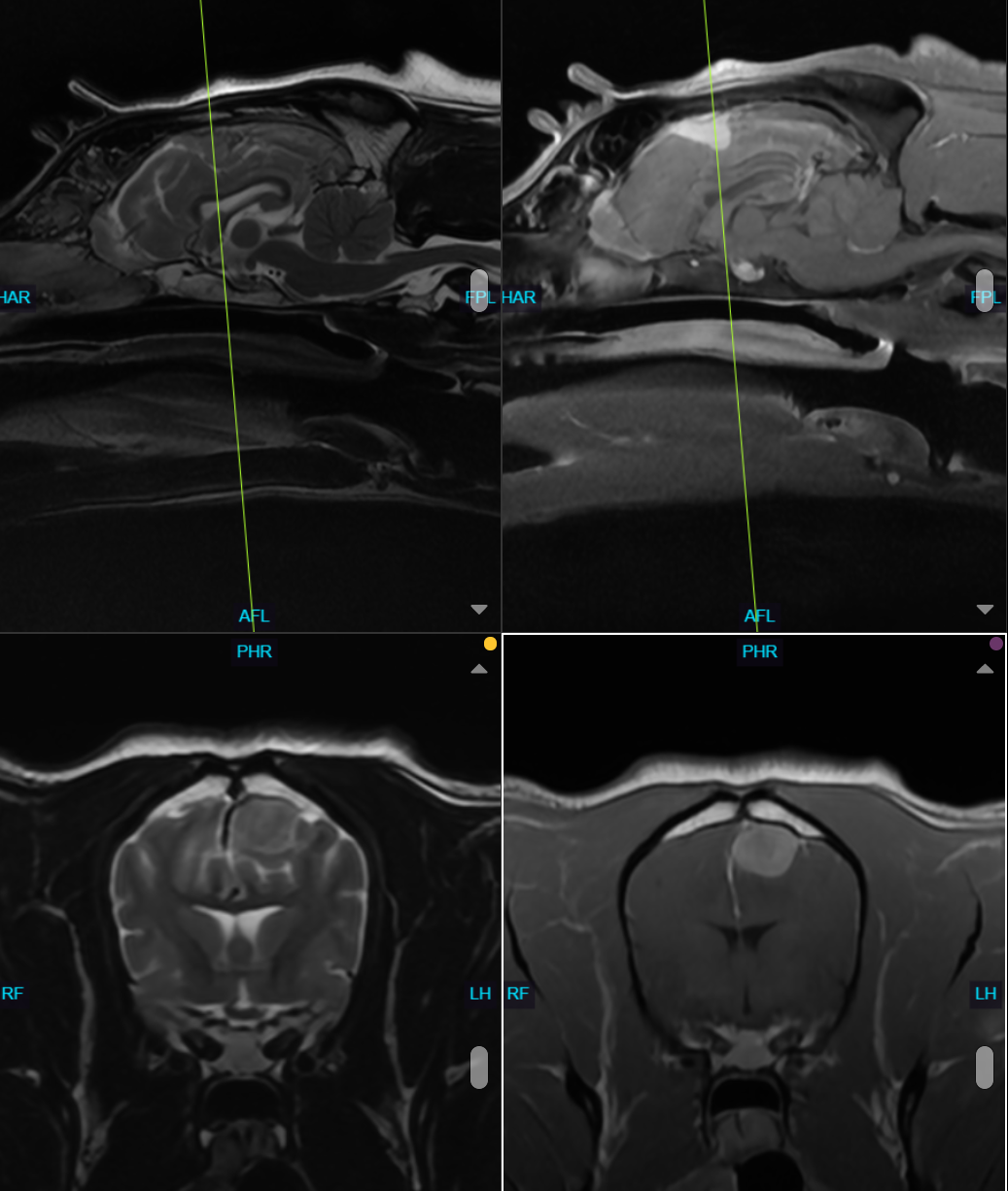
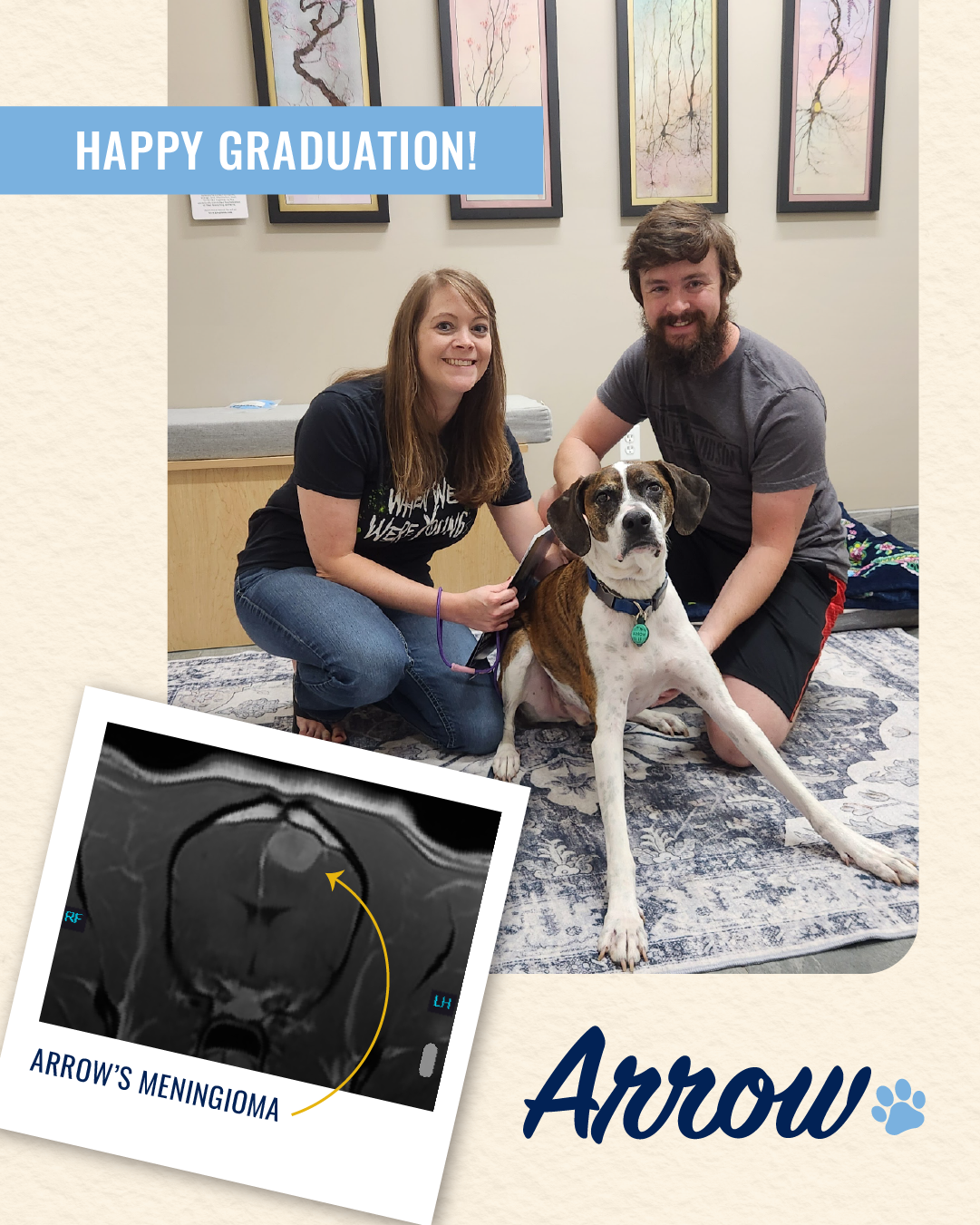
MRI image of a canine patient with meningioma tumor.
Treatment Options for Dogs with Brain Tumors
The goals of therapy for brain tumors are to eliminate or reduce the tumor size and mitigate secondary effects (like cerebral edema), all while preserving an excellent quality of life. Treatment depends on several factors: the type, location, and size of the tumor, as well as the pet's age and general health. While treatment aims for the best outcome, it is important to note that most dogs are ultimately euthanized or die due to the progression of neurological signs attributable to the tumor.
Stabilization: Prior to definitive treatment, most dogs are stabilized with corticosteroids and may be prescribed anticonvulsant medication to prevent or control seizures.
Palliative therapy for animals with brain tumors includes corticosteroids to reduce cerebral edema and anticonvulsants for seizure control.
Definitive treatment options include surgery, radiation therapy, and chemotherapy. These methods may be used individually or in combination. Prior to definitive treatment, most dogs are stabilized with corticosteroids and may be prescribed anticonvulsant medication to prevent or control seizures.
Specific treatment options, recommendations, expectations, follow-up, and prognosis for individual cases are best discussed with a specialist in radiation oncology. A searchable list of radiation oncologists is available here. Note that ongoing evaluation of these treatment methods remains crucial to improving prognosis for affected dogs.
Veterinary radiation oncology specialty centers in the DC, Maryland, and Virginia area include Veterinary Radiation Oncology of the Chesapeake, BluePearl Pet Hospital Rockville,Friendship Hospital for Animals, and Veterinary Referral Associates.
Surgery
Brain tumor surgery in dogs is considered a definitive treatment option, and it is often used in combination with other therapies like chemotherapy and radiation therapy. The goal of surgery is to eliminate or reduce the tumor size (complete excision or debulking) and mitigate secondary effects, such as cerebral edema, while preserving an excellent quality of life for the pet.
Radiotherapy
Radiation therapy is considered a definitive treatment option for brain tumors in dogs and uses focused beams (like IMRT or Stereotactic RT) to damage tumor DNA, shrinking the mass and improving quality of life, with treatment plans varying from conventional (daily) to hypofractionated (fewer, higher doses), extending survival significantly for many dogs, especially with meningiomas, often combined with surgery or newer immunotherapies.
Treatment is precisely targeted through advanced imaging to focus high doses on the tumor while sparing healthy brain tissue. Radiation damages tumor cell DNA, preventing them from reproducing.
Treatment types and protocols:
Conventional fractionation: 12-16 daily treatments (M-F) for a total dose of 44-48 Gy.
Hypofractionated: Fewer, higher-dose sessions (e.g., 3-8 fractions weekly) for faster treatment.
Stereotactic radiosurgery (SRS): Highly focused, often used for smaller tumors, showing excellent results.
Prognosis for Dogs with Brain Tumors
Combination Therapy Prognosis and Survival
Surgery is frequently combined with other treatments to improve outcomes:
Surgery combined with chemotherapy: Reported median survival time of 16–20 months.
Surgery and radiation therapy are frequently combined, which is reported to improve outcomes: Reported median survival time of 16–40 months.
Monotherapy Survival Prognosis and Survival
Surgery (complete excision or debulking) alone has a reported median survival time of 10–30 months.
For radiation therapy (hyper-fractionated) alone, the reported median survival time is 10–12 months.
Concerned about your dog?
If you believe your pet may be experiencing symptoms related to a brain tumor, we encourage you to request an appointment with our veterinary specialists for consultation and personalized care.