
You are about to place a gastric feeding tube in a cat with severe thermal burns.
You plan to treat this cat with adjuvant HBOT to speed healing of its wounds and assist in pain management. Which type stomach tube should you NOT select to use if the patient will be treated with HBOT, and why?
ANSWER: You would NOT choose a stomach tube with a cuff that is inflated by air (image below left.)
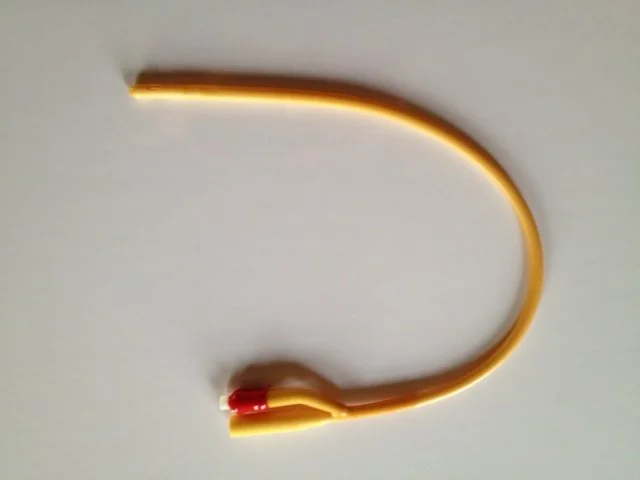
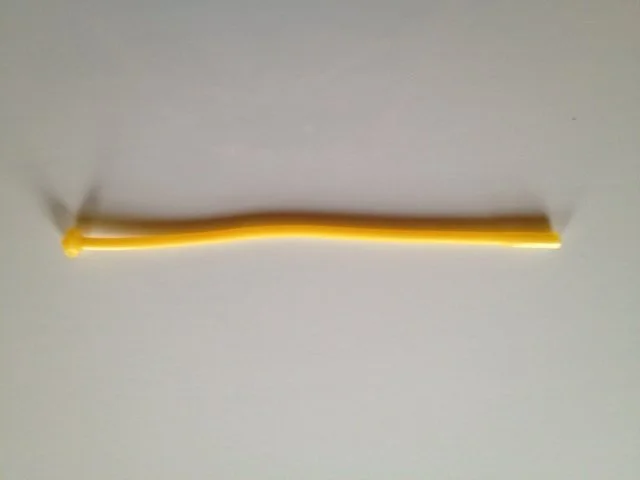
This is another Boyles' Law question (Reference Jain K K, Textbook of Hyperbaric Medicine, 5th and Revised Edition, Hogrefe, 2009, page 22). If the cuff is inflated by air, it will decrease in volume as pressure increases during the session, and may dislodge and slip out of the stomach.
Ideally, you would select a tube with a mushroom tip (image above right). The mushroom tip will not collapse during the increased pressure of a hyperbaric session. If a stomach tube (or any other type of tube) with a balloon cuff has been placed, the cuff should be filled with sterile saline rather than air, as a fluid filled cuff will not collapse during clinical hyperbaric oxygen therapy.
You are discussing treatment options with a physician who specializes in pulmonary medicine.
His cat has a non-healing axillary wound. When you suggest adjuvant HBOT he has concerns that this may result in pulmonary oxygen toxicity. Is the following statement true or false?
Using the normal protocols for HBOT treatment, pulmonary oxygen toxicity has never been reported.
ANSWER: True.
Using normal protocols for HBOT with intermittent sessions, punctuated by periods of rest, pulmonary oxygen toxicity has never been reports (Reference Kindwall and Whelan, Hyperbaric Medical Practice, Second Edition, Best Publishing, 2004, page 95).
Oxygen toxicity during hyperbaric oxygen therapy may be associated with a seizure.
Which of the following has not been shown to increase the chance for oxygen toxicity?
increased thyroid hormones
increased adrenocortical hormones
fever
midazolam
epinephrine
ANSWER: 4. midazolam
Midazolam, in fact, is a benzodiazepine which may be used to reduce the chance for oxygen toxicity induced seizures. Elevations in the other hormones listed, or the presence of a fever, may enhance the chance of oxygen toxicity (Reference, Jain KK, Textbook of Hyperbaric Medicine, 5th and Revised Edition, Hogrefe, 2009, page 52)

You are treating a feline with cellulitis associated with the incision closure site following laparotomy for removal of a string foreign body. You decide to employ adjunctive HBOT.
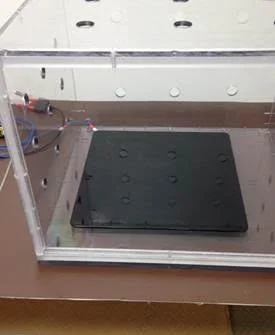
The cat will be treated in a clear polycarbonate module inside the chamber to keep it from accidentally trapping a foot under the sliding gurney tray. You want to ground the patient to reduce the chance of static formation, but you know the cat will remove a grounding strap should you attempt to attach it to a limb. How can you accomplish a reliable patient ground in this case?
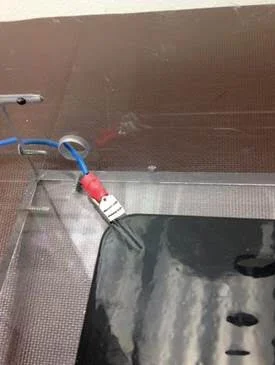
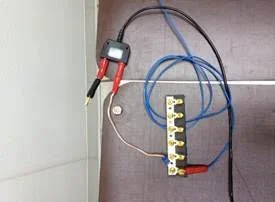
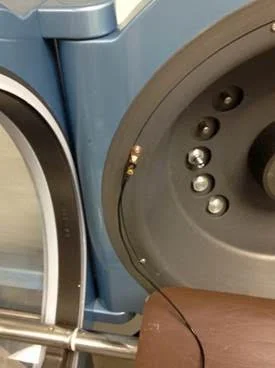
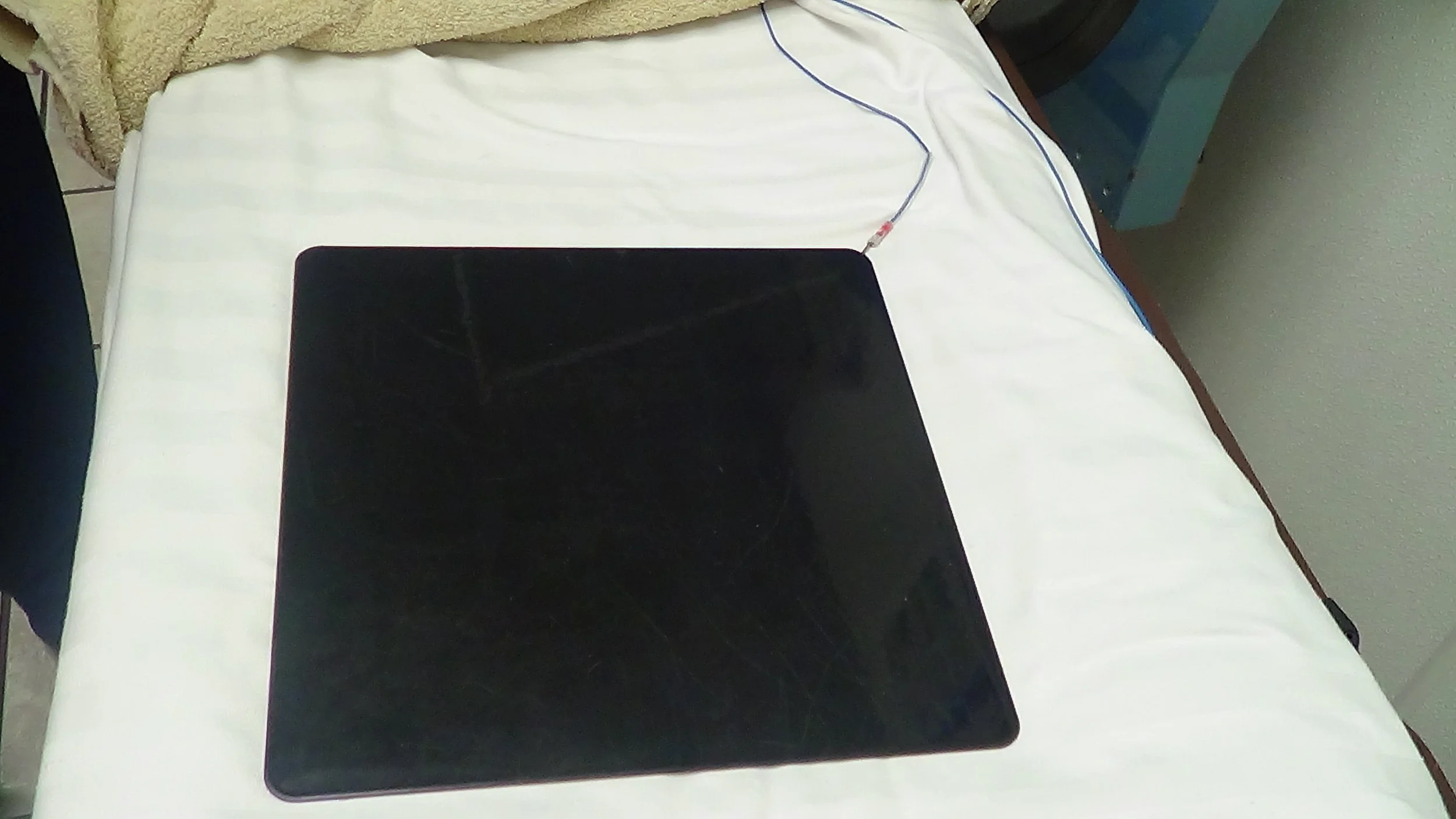
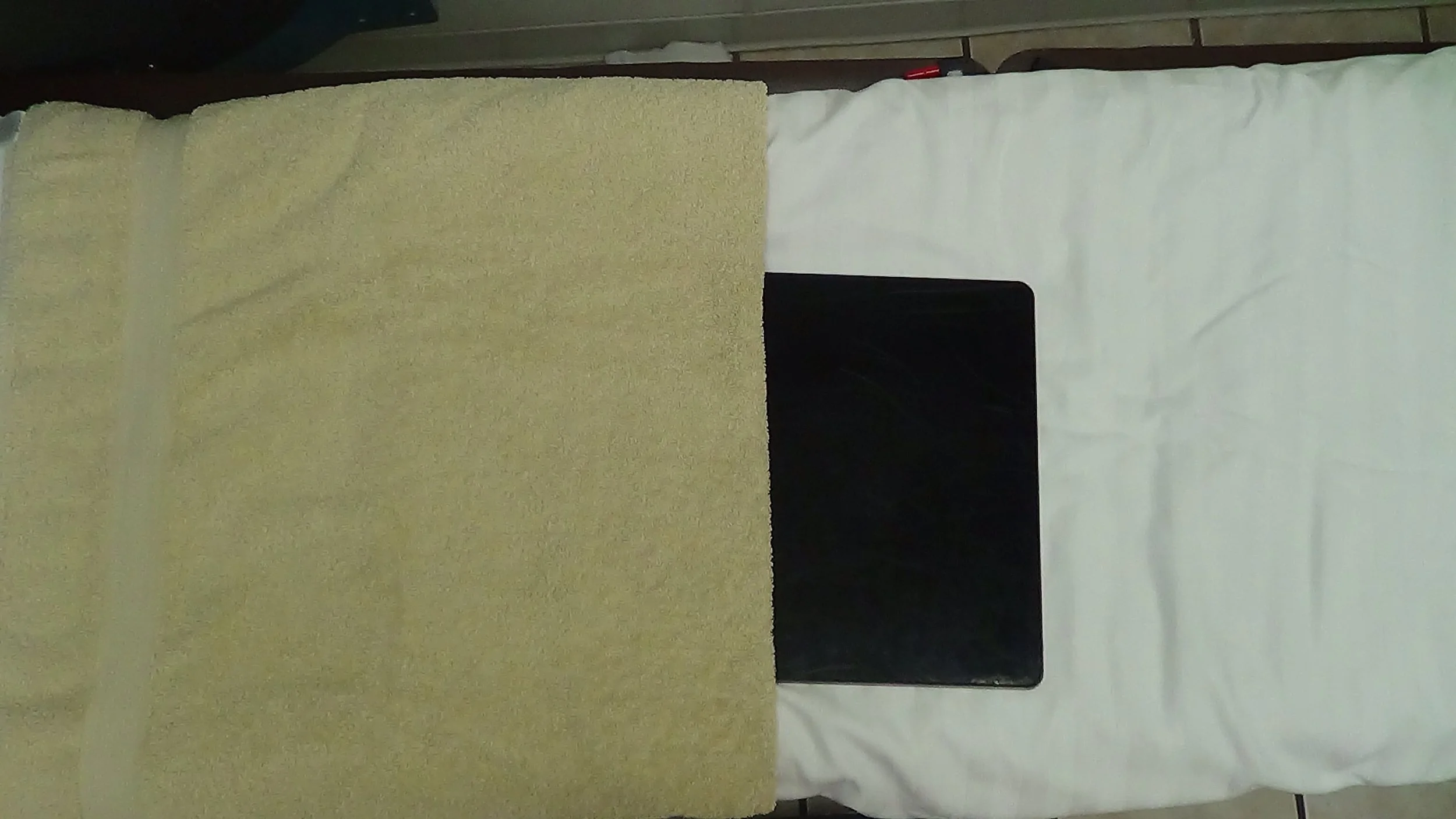
ANSWER: You can accomplish reliable grounding by placing a dispersion plate at the bottom of a module, and grounding it by attaching it through a connection or series of connections to the ground site on the metal portion of the chamber or door. When you have multiple patients in separate modules you may ground each one in this fashion, and attach the connections to a module which leads to the chamber ground. (Images below.)
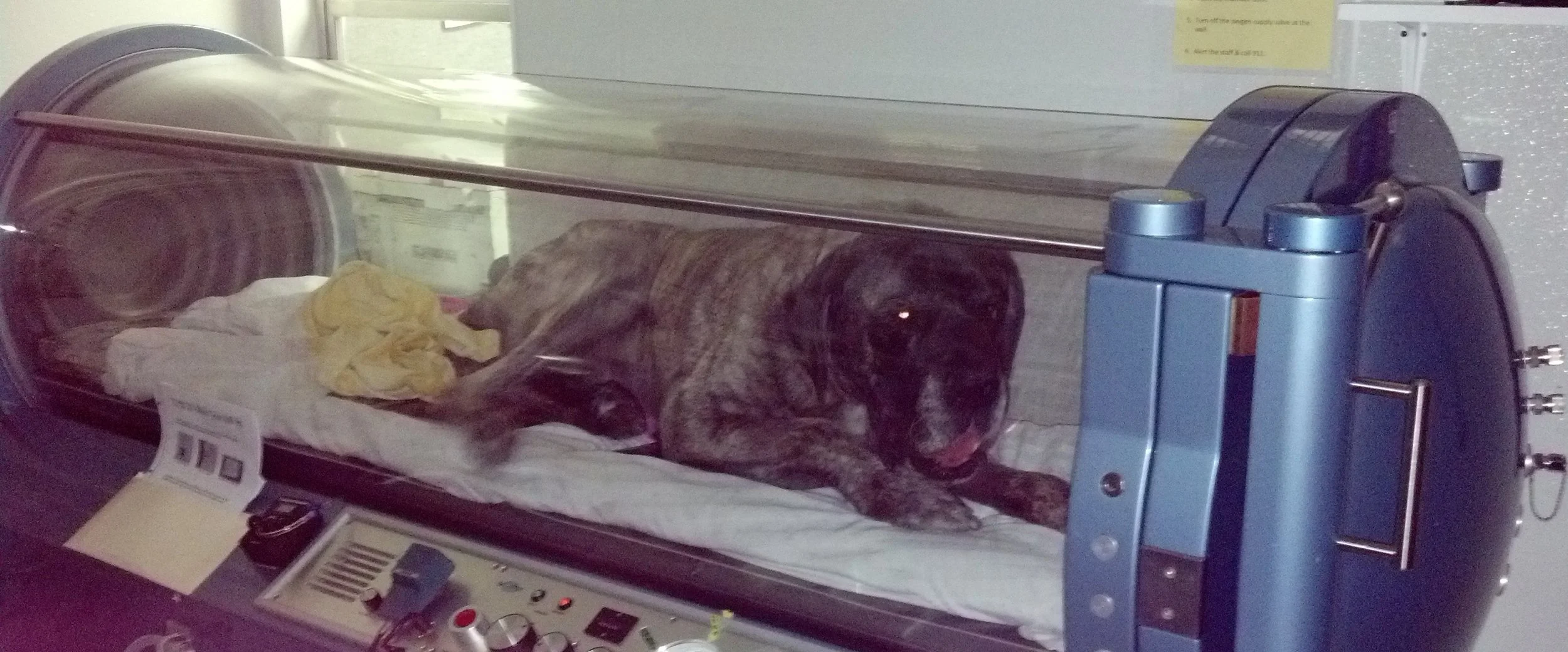
You are treating a very large Mastiff for marked spinal stenosis presenting with cauda equina syndrome.
A dorsal laminectomy has been performed at L7-S1, and you decide to employ adjuvant HBOT in light of the severe swelling of the nerve roots discovered at surgery. This dog is very gentle, but repeatedly removes his anti-static bracelet when you try to place it. Please describe another option for assuring adequate grounding during an HBOT session for this patient.
ANSWER: To assure safe grounding, you may place one or two large grounding plates under the patient, and attach the ground wire to the grounding connection of the chamber or the chamber door. All bedding and towels must be 100% cotton.
You are treating a small breed puppy with head trauma, skull fractures, and cervical spinal injuries with adjuvant HBOT in a monoplace chamber.
This patient has a low body temperature. Which of the items below can be used to help keep the puppy warm in the chamber treatment module.
100% cotton towels
warm water bottle filled completely with water and safely separated from the puppy in the module
both of the above
ANSWER: 3. both of the above
The warm water bottles must be filled with water only. No air pockets. They should not be hot, they must be completely covered in 100% cotton towels or stockinette, and they should be separated at a safe distance so they do not directly touch the puppy and risk thermal burns (Reference Kindwell and Whelan, Hyperbaric Medicine Practice, Second Edition, Best, 2004, page 344).
© RKLyman, LLC. All Rights Reserved.