
HBOT Safety/Review Questions #9

You are treating a small breed female puppy with adjuvant hyperbaric therapy as an outpatient in the management of a large bite wound.
The client arrives with the patient on a Monday morning, and you notice the puppy's toenails are freshly painted with hot pink nail polish.
How do you proceed, and why?
ANSWER: A patient with freshly applied nail polish is not allowed to enter the hyperbaric oxygen chamber because nail polish contains volatile and flammable solvents such as acetone (Reference, Certified Hyperbaric Registered Nurse Study Guide, September 2009, National Board of Diving and Hyperbaric Medical Technology). Most human hyperbaric treatment facilities do not allow a patient in the chamber until 48 hours after the application of nail polish.
A fractious large breed canine with a severely comminuted forelimb fracture complicated by osteomyelitis is referred for adjuvant hyperbaric oxygen therapy.
The orthopedic surgeon is managing the fracture with a titanium external fixator. Please discuss how you would proceed.
ANSWER: Titanium plates, screws, and other internal fixation devices do not represent a problem in the chamber, but titanium external fixators (and titanium eyeglass frames in people) are not HBOT compatible. If either were to accidentally break in the pressurized high oxygen environment, they would heat up rapidly as the fresh edges of the metal super oxidize in the chamber. This would be a dangerous source of ignition. Therefore, it is not recommended that patients with external titanium fixators be treated in a hyperbaric chamber, even when wrapped in 100% cotton. (Reference, Hink J, Jansen, E, Titanium in a hyperbaric oxygen environment may pose a fire risk, Aviat Space Environ Med, 2003, Dec, 74(12) 1301-2)
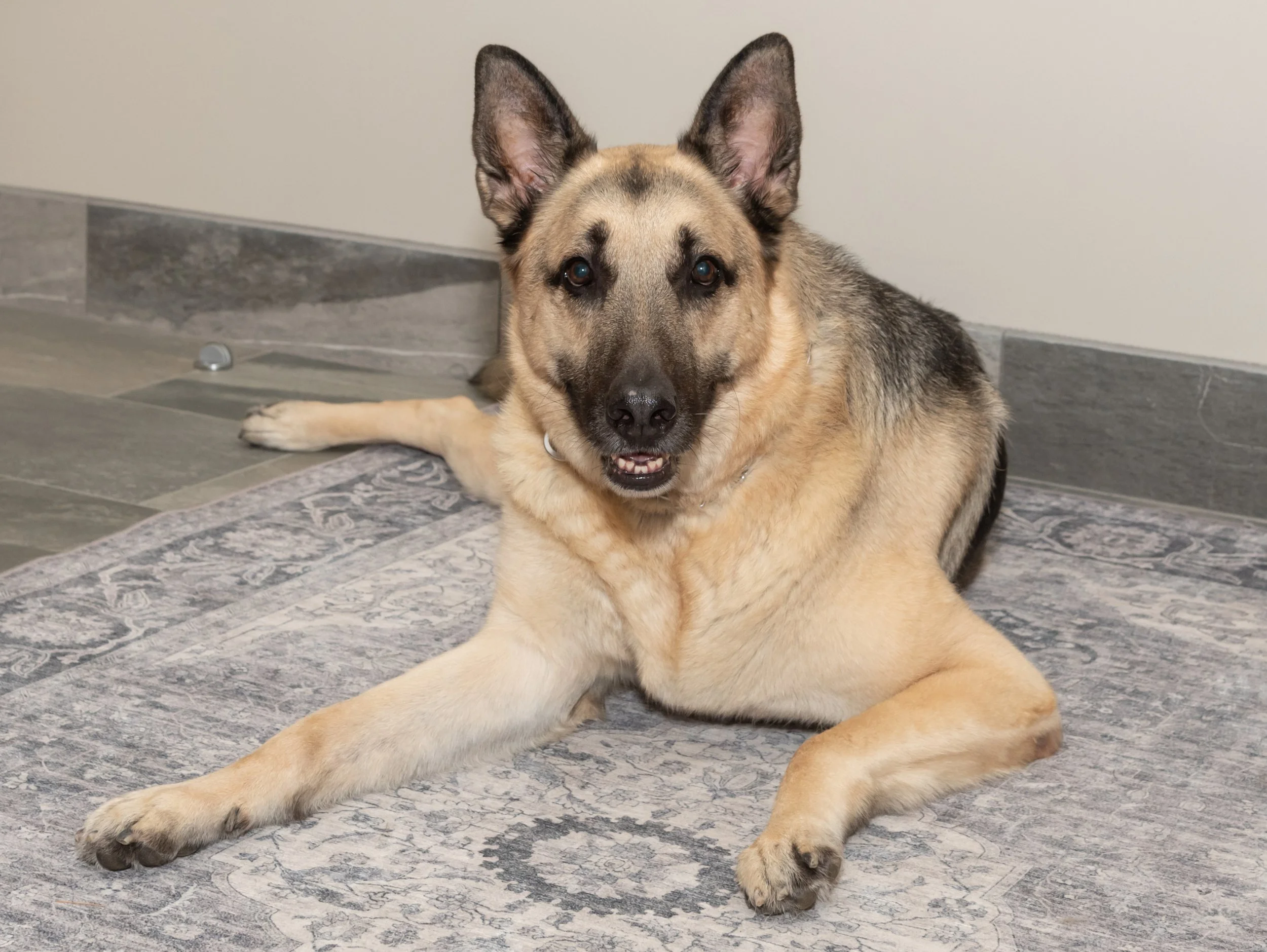
You are treating a 97 pound German Shepard (working canine) post-op spinal surgery with adjuvant HBOT as an outpatient.
The owner/trainer informs the staff member bringing the patient to the chamber that the dog is the alpha high energy type, and will therefore do much better if he can have his tennis ball in the chamber to chew on during the treatments. The owner gives the ball to the staff member and asks her to give it to the patient while in the chamber.
What will happen to the ball if you place it in the chamber? What may happen if the dog chews on it during a treatment session?
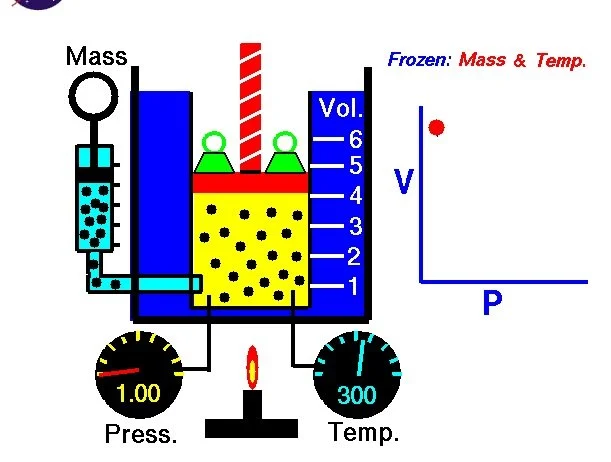
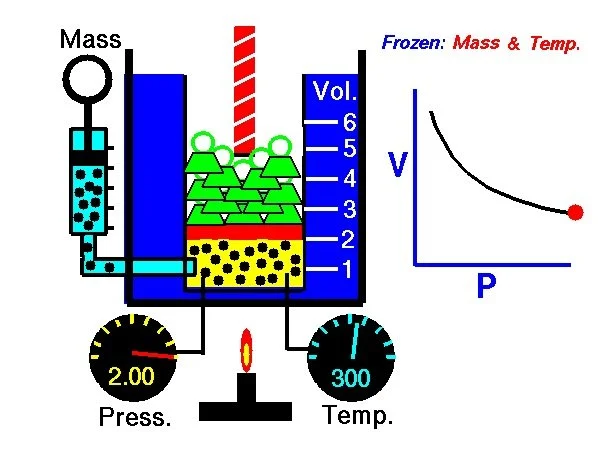
ANSWER: The tennis ball is not allowed in the chamber. It is not 100% cotton, and it is filled with air. Thus, if the HBOT session is given at 2.0 ATA, it will reduce the volume of the air in the ball to half of its volume at sea level (Boyle's Law) see images below. This could lead to accidental ingestion. In addition, as the patient vigorously plays with the ball, the synthetic covering may produce static electricity. If this large dog starts to propel and then chase the ball around the chamber, then injury to the patient or damage to the chamber may result. Clients often ask to place various items including clothing items and blankets in the chamber with their pets. Safety protocol dictates that the answer should be a polite "No thank you.".
These two images demonstrate Boyle's law. The volume of air in an enclosed vessel will half as the pressure on that vessel.
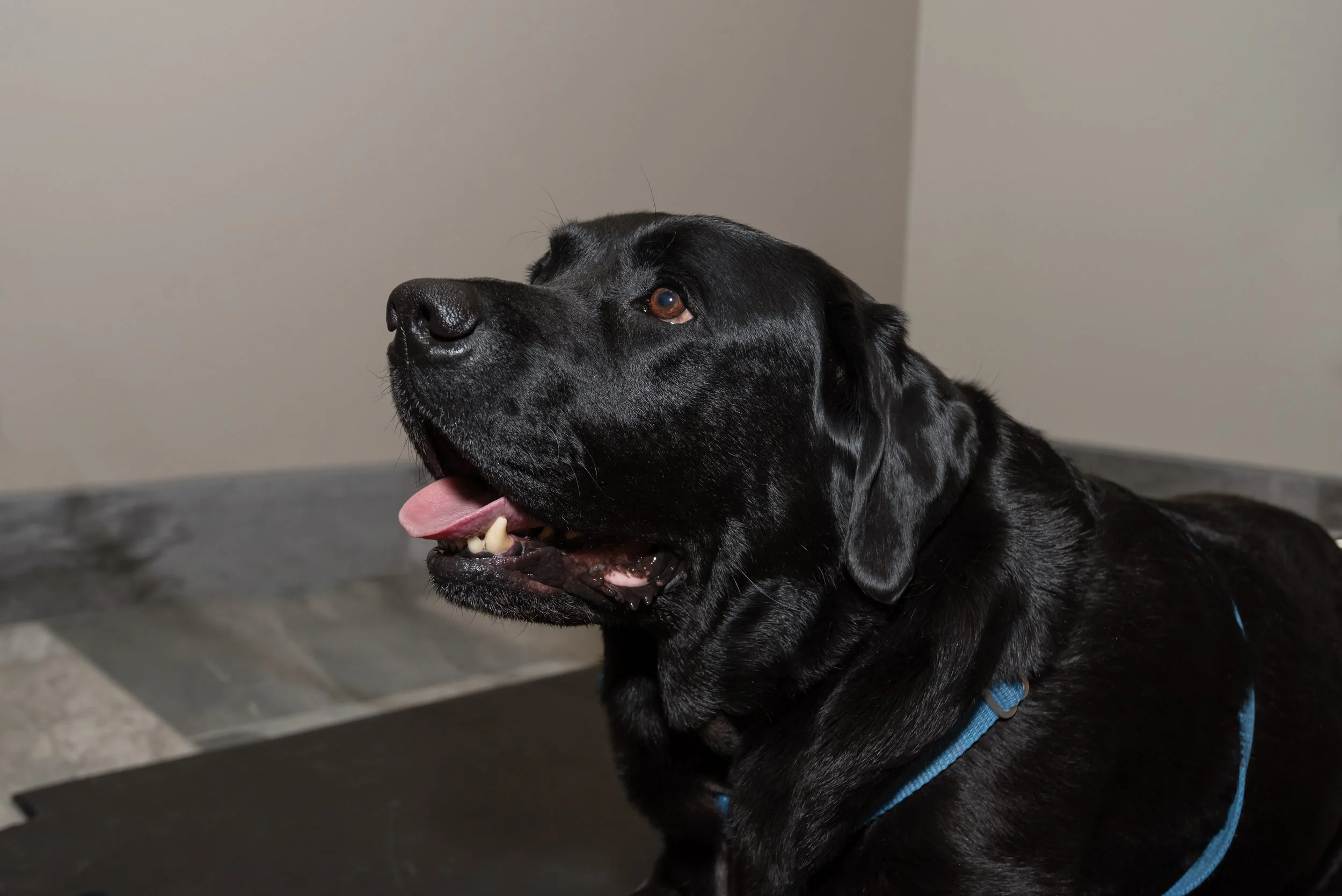
You are managing a 10-year-old F/S Labrador Retriever who developed peritonitis secondary to a jejunal rupture.
After laparotomy, resection, and anastomosis of the affected bowel, you want to employ adjuvant HBOT. You expect to give one hour BID sessions at 1.5 ATA for the next 7 to 10 days provided the patient remains in your care and responds favorably to your intensive critical care efforts. The owner is a Doctor of Optometry and expresses concern over the potential development of cataracts. How do you respond?
ANSWER: In this patient adjuvant HBOT is an important part in the management of life-threatening septic peritonitis. 20 to 28 sessions are anticipated. In humans, published reports and clinical experience indicate that new cataracts do not develop within a series of 20 to 50 sessions.
Another study in humans showed that new cataracts did develop in 7 of 15 patients exposed to between 150 and 850 hyperbaric sessions (Reference, Kindwall and Whelan, Hyperbaric Medical Practice, Second Edition Revised, Best, 2004, page 75).
In a single canine patient treated with more than 700 sessions over a five year period, necropsy and histopathology did not reveal the development of cataracts (Personal Communication, Ronald Lyman DVM, 2013).