
Making Good Choices in Veterinary Anesthesia: Anesthesia for Patients in Pain
By Dr. Elana Rybak, CVMA, Imaging and Anesthesia Veterinarian
Introduction: Anesthesia Considerations for Painful Patients
Let’s talk about anesthesia for a painful patient. In our practice this is often due to intervertebral disc disease, but the same principles can apply to many painful patients that require anesthesia.
For this case example we will be anesthetizing Shamrock, an 8-year-old, 14 kg spayed female Beagle that presented for severe neck pain — a situation that often requires emergency neurologic evaluation.
Patient Presentation: Severe Neck Pain and Neurologic Deficits
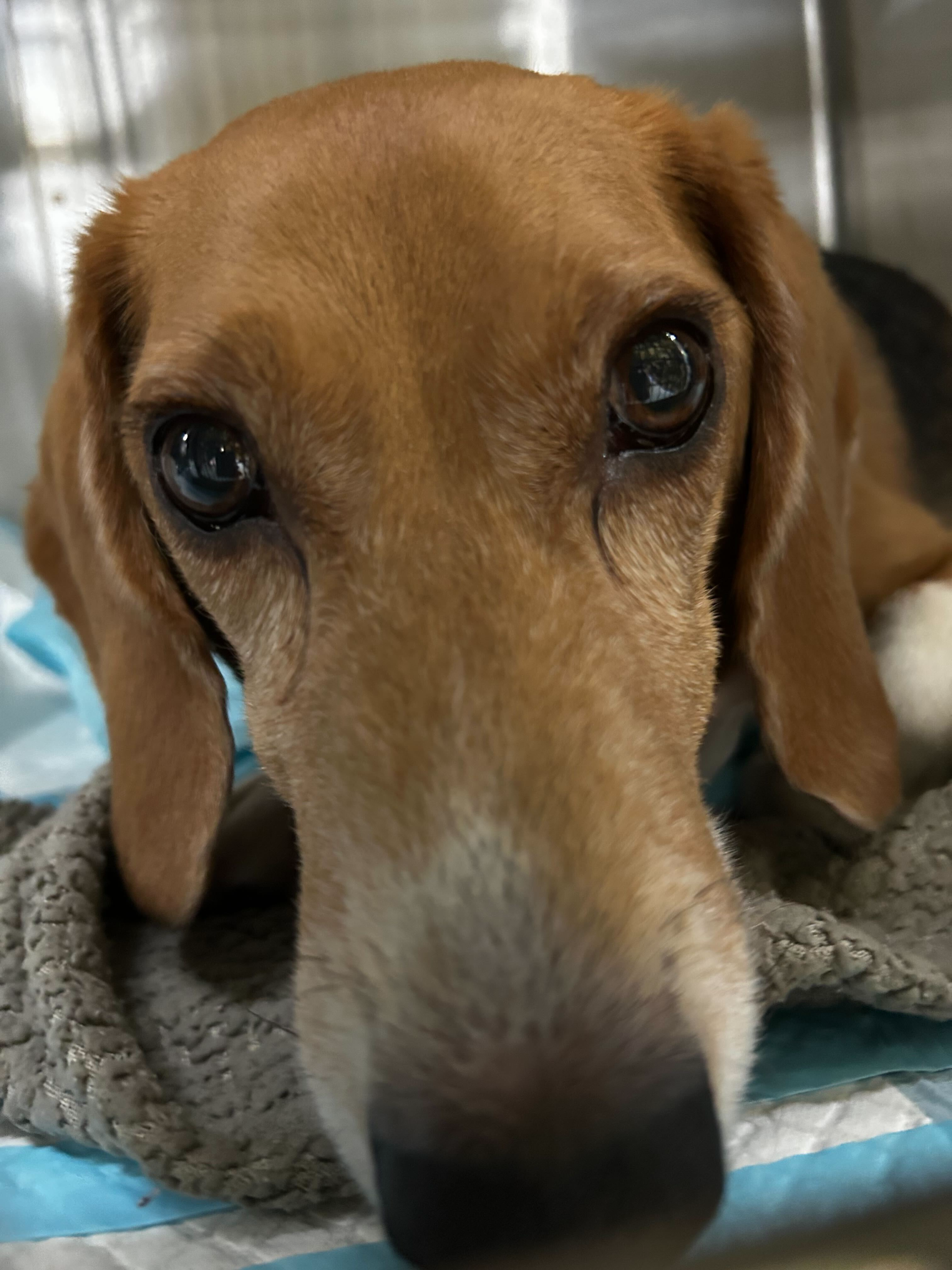
On presentation Shamrock had a very low head carriage and a short, shuffling gait in the forelimbs. On exam she flinched and developed neck spasms when her neck was palpated. She also had conscious proprioceptive deficits in the hind limbs and was extremely reluctant to allow range of motion testing. When her neck was gently dorsoflexed she vocalized.
Based on these findings, a cervical spine MRI was recommended to determine the cause of her clinical signs.
Building an Anesthetic Plan for a Painful Patient
When creating Shamrock’s anesthetic plan we must consider both her pain level and the requirements of the procedure. For MRI she must remain in dorsal recumbency with her neck extended and flat on the MRI table for approximately one hour.
The first consideration for this patient is pain and anxiety.
Managing Anxiety and Pain Before Anesthesia
Shamrock’s owners reported that she becomes nervous when placed in a kennel or run and will often pace and vocalize. Because she would need to be kenneled during the perianesthetic period, oral calming medications were considered.
Ideally these medications are given 1–2 hours prior to a stressful event, but there is still benefit to administering them anytime prior to anesthesia as they can support calmer recoveries and reduce stress during hospitalization.
In Shamrock’s case she received:
100 mg Trazodone
300 mg Gabapentin
These were administered as soon as she was admitted.
Initial Sedation and Preparation for Imaging
Shamrock allowed intravenous catheter placement without additional sedation. After IVC placement she received:
Maropitant 1 mg/kg IV
Methadone 0.3 mg/kg IV (hydromorphone 0.1 mg/kg would also be a good option)
Because of her history of kennel anxiety, she was also given Dexmedetomidine 1 mcg/kg IV to see if this would help her relax while awaiting imaging.
This combination provided adequate sedation and Shamrock rested comfortably in her kennel.
Sedation for Transport to MRI
When it was time to move Shamrock to MRI she was reluctant to walk. Attempting to lift her onto a gurney caused her to flail, worsening her neck pain.
To facilitate safe transport, an additional Dexmedetomidine dose of 2 mcg/kg IV was administered. This produced deeper sedation while still allowing her to lift her head slightly, making transport to MRI easier and less stressful.
Induction of General Anesthesia for MRI
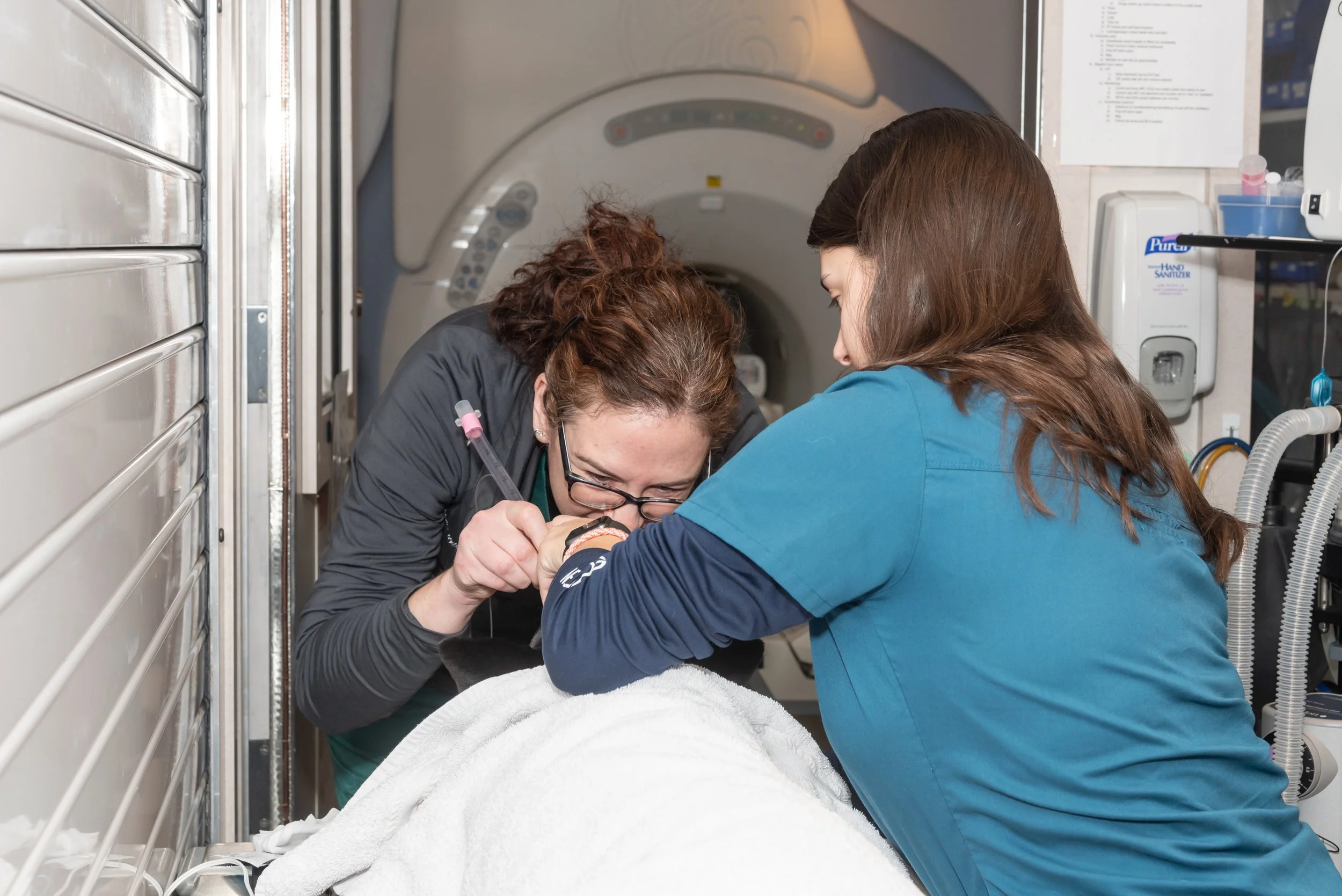
Once in MRI, Shamrock was pre-oxygenated and then induced for general anesthesia.
For generally healthy painful patients, a combination of the following medications is often used:
Ketamine (0.5–1 mg/kg)
Midazolam (0.2 mg/kg)
Propofol titrated to effect
Ketamine provides analgesic properties, while midazolam contributes muscle relaxation and reduces the amount of other induction agents required.
Maintaining Anesthesia During the MRI
Shamrock was maintained on isoflurane inhalant anesthesia.
Approximately 30 minutes into the scan her respiratory rate increased and she appeared to be getting lighter under anesthesia. Instead of increasing the isoflurane percentage, a Fentanyl dose of 3 mcg/kg was administered.
This caused brief apnea lasting about one minute, after which Shamrock resumed spontaneous respirations and remained in an appropriate anesthetic plane for the remainder of the MRI.
Recovery After Anesthesia
Once the scan was complete, Shamrock was extubated within about ten minutes and returned to her kennel.
During recovery she remained calm and did not show pacing or anxious behavior. Later that day she was discharged uneventfully to go home with her owners.
Key Takeaways: Anesthetic Management for Painful Patients
Painful patients can present unique challenges during anesthetic management.
Helpful strategies include:
Using calming medications such as trazodone or gabapentin for pre- and post-anesthetic anxiety
Implementing multimodal anesthetic protocols
Re-dosing medications during anesthesia rather than relying solely on higher inhalant levels
Additional pain management techniques such as local anesthetic blocks and CRIs—including ketamine, opioids, lidocaine, and dexmedetomidine—may also support safer and smoother anesthetic events.
Thinking about the whole patient—including behavior, pain level, procedure, and co-morbidities—helps guide better anesthetic decisions.