
Tetraparesis in Dogs: C7–T1 Disc Compression Treated with Ventral Slot Surgery
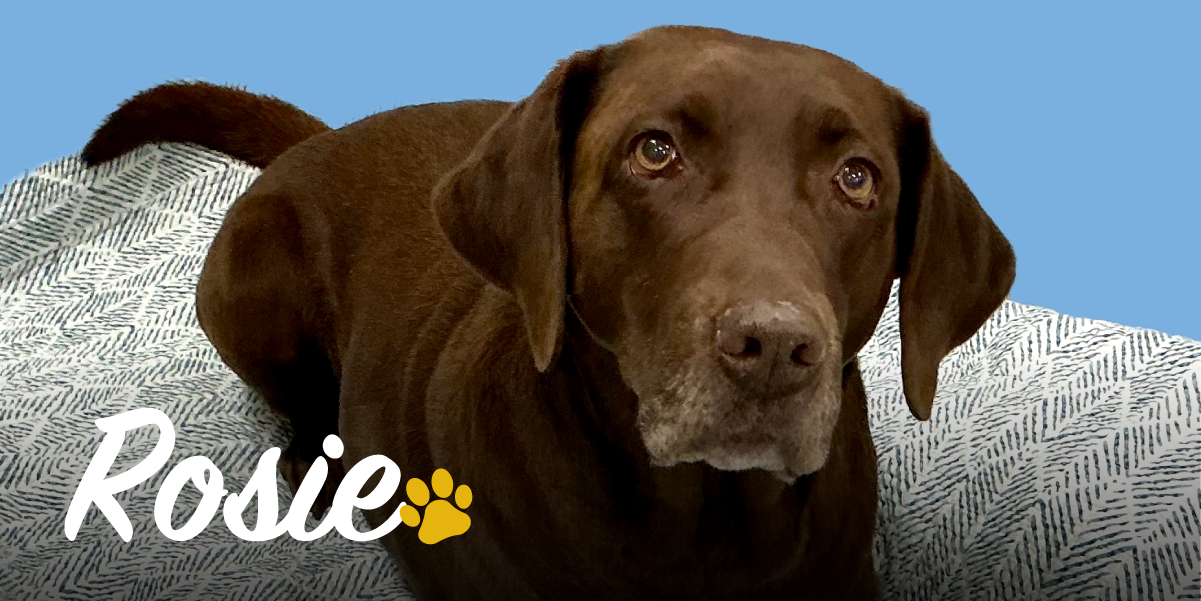
In January, Rosie’s owner brought her to VNIoC after becoming concerned about what appeared to be back pain.
On examination, Dr. Jay McDonnell noted that Rosie had tetraparesis — a neurological condition characterized by weakness in all four limbs. In dogs, tetraparesis often leads to difficulty walking and can be associated with disc-related spinal cord compression.
Diagnosis: Chronic C7–T1 Disc Causing Spinal Cord Compression
A same-day MRI revealed a chronic disc at C7–T1. Although this is an unusual location, it was presumed to be the cause of Rosie’s neck pain, back pain, and tetraparesis.Rosie’s MRI images demonstrated spinal cord compression from this long-standing disc at the C7–T1 vertebral junction.
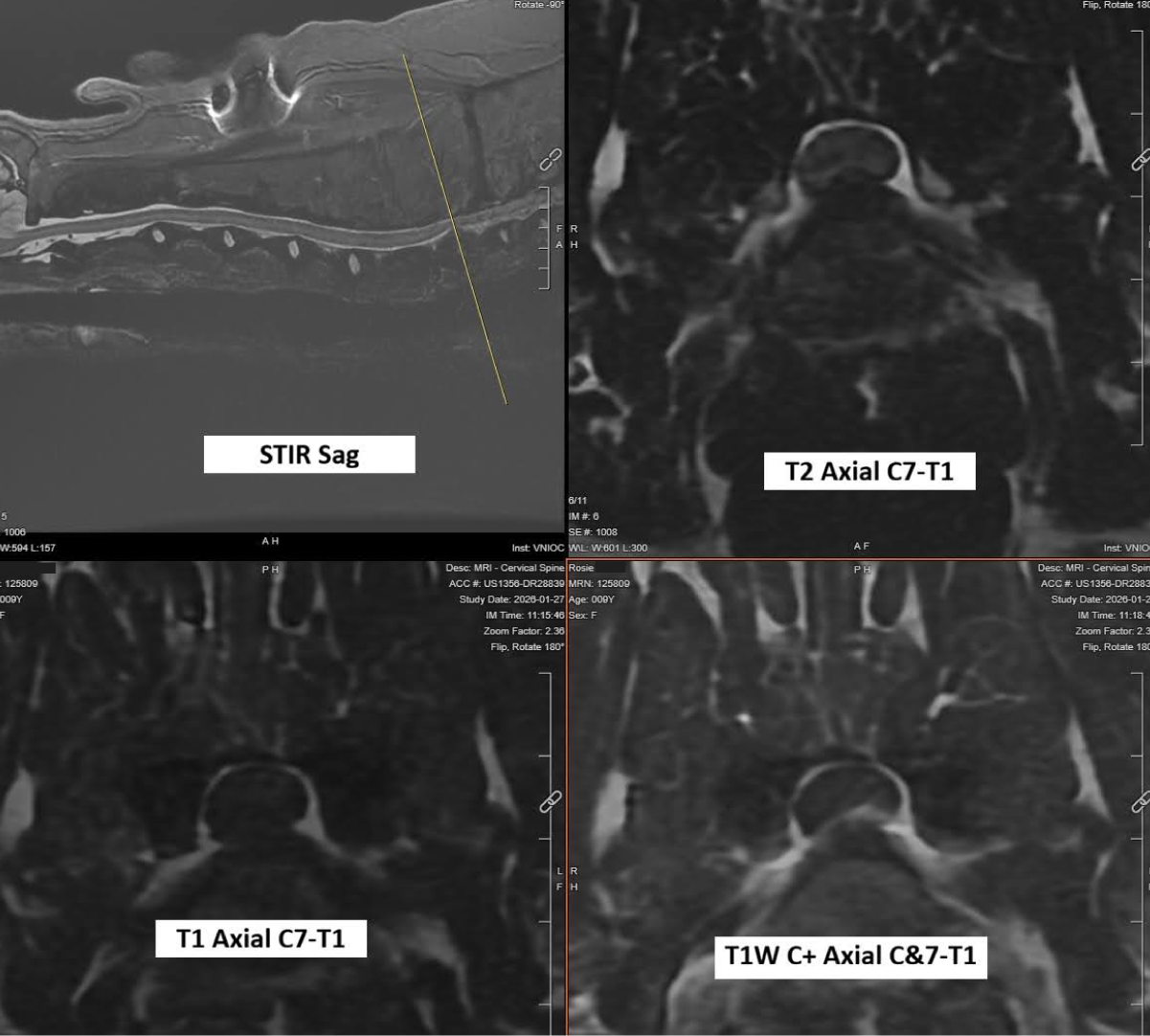
Images from Rosie’s MRI: top left is a sagittal (or from the side) image that shows the disk rupture compressing her spinal cord at the level of the line (C7-T1). The other images are cross-sectional images at C7-T1 showing the disk severely compressing her spinal cord.
Because Rosie was still able to walk, surgery was not considered urgent — but it was strongly recommended to relieve the compression and prevent further progression.
The most common ruptured cervical spinal disks in dogs occur at the C2-C3 and C6-C7 spaces. A ruptured disk at C7-T1 is uncommon, but not unheard of — so far in 2026, VNIoC has treated just one other case. These disks ruptures (typically Hansen Type I) are most frequent in small, chondrodystrophic breeds like Dachshunds, Beagles, and Poodles, often causing severe neck pain, stiff neck, and reluctance to move.
Treatment: Ventral Slot Surgery at C7–T1
Rosie was placed on activity restriction and prescribed gabapentin to help with pain while awaiting surgery. A little over two weeks after her initial presentation, she underwent ventral slot surgery at C7-T1.
Ventral slot surgery cases tend to show improvement faster than patients undergoing back surgery. Many are walking independently when they leave the hospital.
At VNIoC, cervical spinal surgery patients receive the similar in-hospital care as back surgery patients. We support them with a continuous rate infusion of pain killers, oral anti-inflammatories and pain medications, supportive care, and rehabilitation exercises and treatment. We utilize the laser on the muscles like a post-op back but instead of doing it on the site (the bottom side of the neck), we do it on the top of the neck.
Recovery and At-Home Care
Rosie was hospitalized for two days following surgery.
At-home care plays a critical role in continued improvement. Rosie’s parents were instructed to:
Enforce strict activity restriction
Perform prescribed rehabilitation exercises
Avoid activities that could result in reinjury
Rosie was discharged after two days in the hospital and continues to improve at home.