
Human surgeons routinely diagnose and treat pain, but when surgeon Dr. Nick E. saw his five year old Mini Australian Shepherd, Lenny, in pain, he wasn’t sure about its source.
He explains, “For the better part of two to three weeks, Lenny was demonstrating pain, but we couldn't tell where it was coming from. He was his same playful self, but every now and then he'd have a little episode where it looked like he was favoring one of his back legs. Then he abruptly got worse and started really demonstrating pain. The episodes escalated to the point where he appeared stuck and couldn't raise his head.”
Recognizing the Signs of IVDD in Dogs
It was clear that Lenny was in pain. “I brought him to our local vet, but he behaved perfectly normally there —I think maybe from the adrenaline of being at the vet. But later at home, he wasn't able to hide his symptoms anymore. He was in tremendous pain, and couldn't move. Lenny stayed in the same spot for 24 hours, which was very unusual l for him as he's a very active dog. So I brought him to Pet+E.R.”
Dr. E continues, “We were glad that a professional could finally see his discomfort, as opposed to him hiding it like when he was at the primary care vet. It's like when you take someone to the doctor and then they immediately feel better.”
Diagnosing Cervical IVDD Through MRI
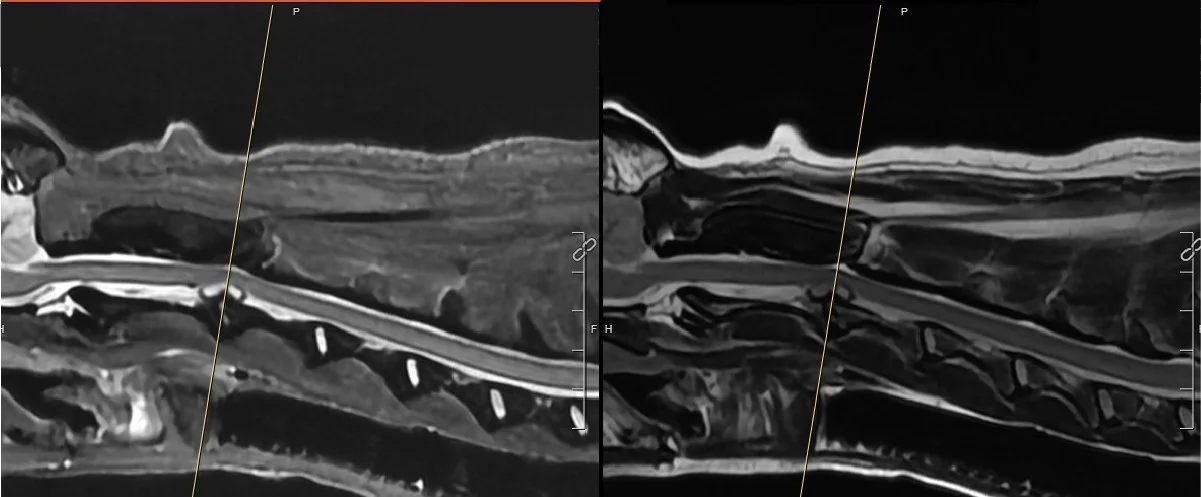
Pet+E.R. referred Lenny to Dr. Jay McDonnell of Veterinary Neurology & Imaging of the Chesapeake. Noting that Lenny had been in pain for over two months, Dr. McDonnell believed Lenny was showing signs of a very painful and progressive spinal cord problem in the neck (cervical myelopathy). Lenny had gotten some temporary relief with rest and pain medications/anti-inflammatories, but he had become worse over the previous month.
Dr. McDonnell recommended a cervical spinal MRI, which led him to diagnose Lenny with a ruptured C2-3 disc. This condition, known as cervical spinal intervertebral disc disease, was causing severe compression of Lenny’s spinal cord.
Spinal Surgery for IVDD: The Ventral Slot Procedure
Dr. McDonnell performed the surgery at the C2-3 level the same day. During the surgery, the ruptured disc material was removed, decompressing the spinal cord. Additionally, fenestrations were performed on the adjacent disc spaces.
Recovery After IVDD Surgery: Lenny’s Progress
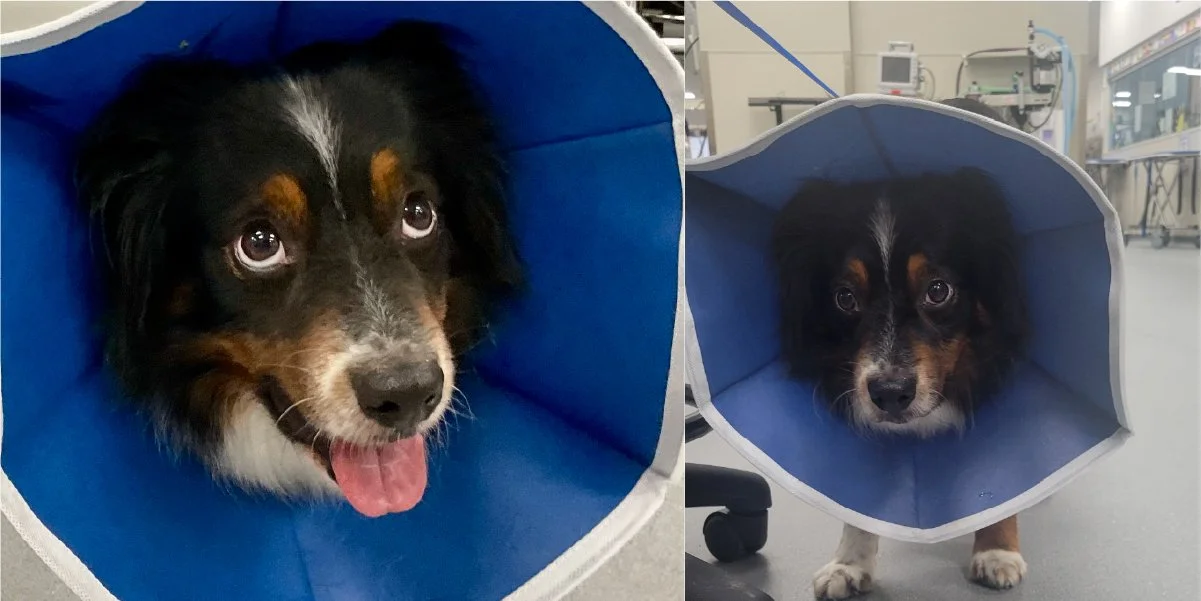
Dr. E. shared “The biggest challenge after Lenny’s surgery has been keeping him contained, because he immediately felt so much better. We're taking him on short walks and following the rules to make sure we're not rushing his recovery.
“We profound respect for veterinarians because it is so hard when your patient can't tell you what is going on. But Dr. McDonnell nailed it. When he saw Lenny, he said, ‘I think this is what's going on, and then we're gonna go to an MRI,’ and he was right on it. Lenny is a whole new dog since the surgery. I was very happy about the whole experience.”