
Lucky Luna: IVDD Diagnosis to Full Recovery!
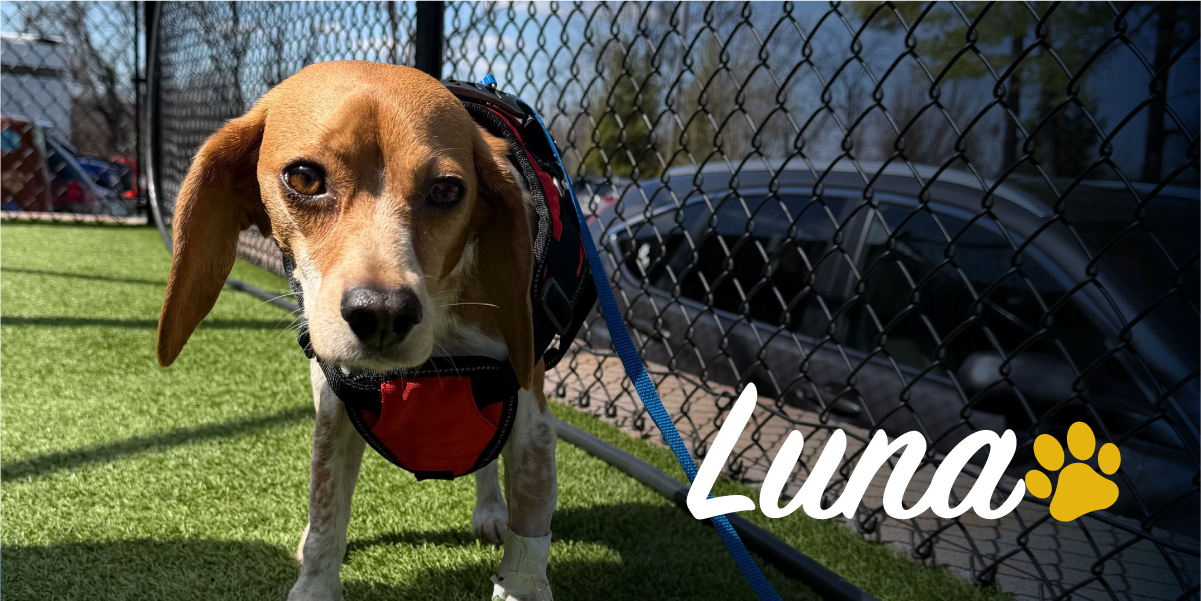
Luna, the sweet Beagle, presented nearly paralyzed from the neck down due to Intervertebral Disc Disease (IVDD). Her rapid recovery to full mobility is a journey that we’d like to share.
After jumping from the couch, Luna began moving slowly and cautiously, prompting a visit to her regular vet where cervical spinal pain was identified in the normally active four-year-old beagle. Despite starting medical management and strict rest, her condition progressed rapidly. Within a few days, she was admitted to Pet+ER suffering from non-ambulatory tetraparesis. Completely unable to stand or coordinate her limbs, she was immediately referred to our specialty neurology team.
Luna’s IVDD Diagnosis
Upon her initial assessment with Dr. Larry Gainsburg, Luna demonstrated an inability to stand and a guarded posture, keeping her head lowered. Her clinical presentation included acute cervical spinal distress and severe spinal pain that extended along her dorsal region. While she exhibited minimal limb movement when supported, her overall motor coordination was severely compromised. To pinpoint the underlying pathology, a cervical spinal MRI was proposed. While Intervertebral Disc Disease (IVDD) remains a primary suspicion for cases like Luna's, diagnostic imaging is vital to differentiate a herniated disc from other potential causes such as inflammatory disorders, infectious processes, or neoplastic lesions of the spinal cord and vertebrae.
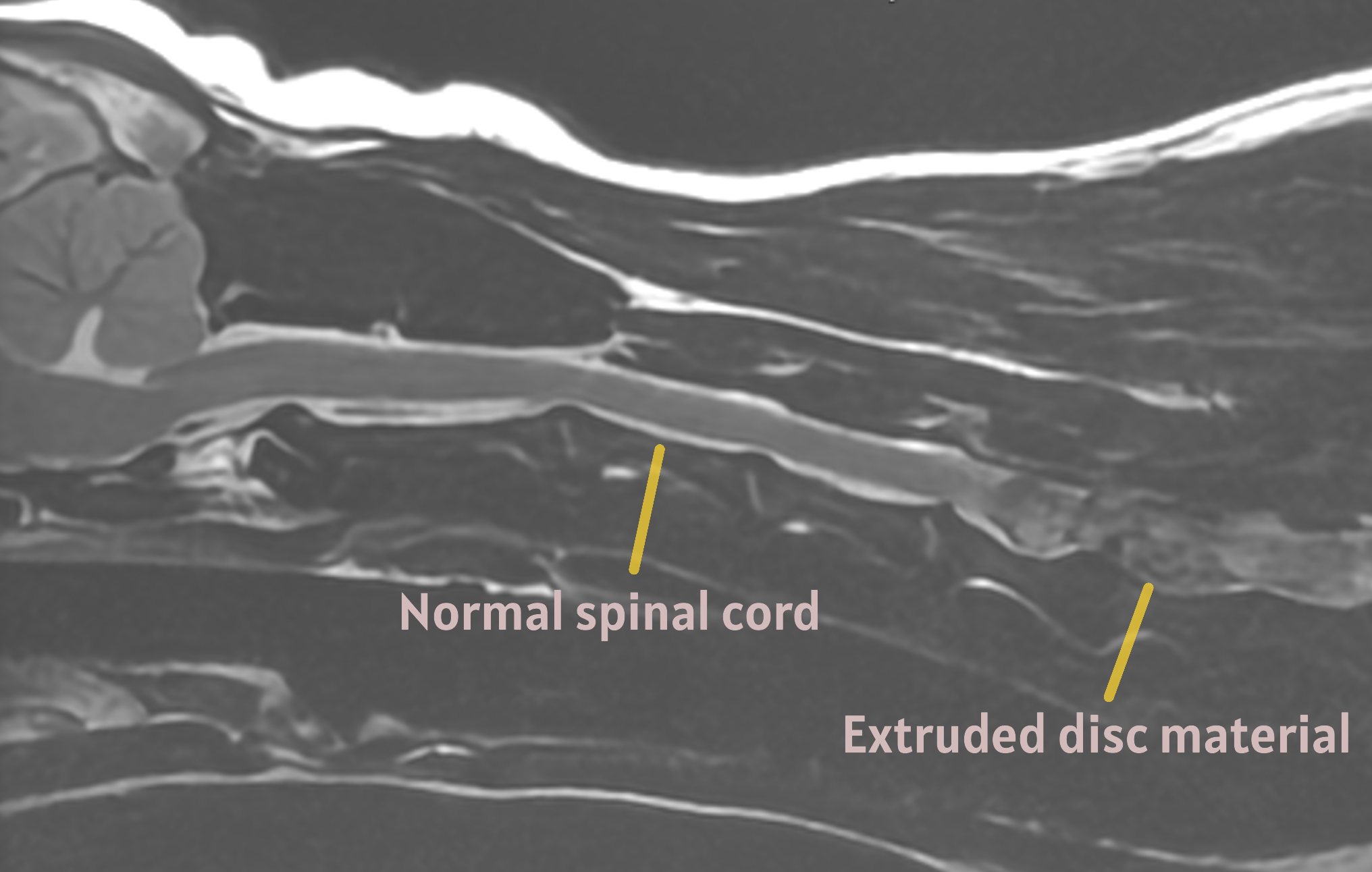
To obtain precise diagnostic imaging, an MRI necessitates that the patient stay perfectly motionless for an extended duration—often 35 to 50 minutes—making general anesthesia essential. To ensure a safe anesthetic event, Luna underwent a comprehensive physical evaluation alongside a complete blood count and serum chemistry profile. The resulting MR images identified a herniated disc at C5-6 as the culprit behind her symptoms. Remarkably, each of these diagnostic measures was completed on the very day she was welcomed into the VNIoC care team’s supervision.
Once the diagnosis was confirmed and Luna was stable, she remained in our care overnight to begin a regimen of intensive pain management.
IVDD Treatment: Hemilaminectomy Surgery & Recovery
The next day Luna underwent a hemilaminectomy. During the two days following the surgery, she remained hospitalized. She recovered well and regained most of her motor function by the first day post-op, with only some knuckling in the right front leg. By the time she was discharged, there was no evidence of ataxia or knuckling in any of her legs.
By the time Luna came in for her two-week post-op recheck to remove the staples, she’d made a full recovery. On her final recheck seven weeks after her surgery, she was approved for graduation with no need to return!